
This morning (Thursday) I read Amy Codjoe’s remarkable and sensitive short essay, “This Land Was Made: Considering the soil that bears witness to America” https://orionmagazine.org/article/this-land-was-made/?mc_cid=fe57d0b1c4&mc_eid=db8c698749. The essay is a moving contemplation of her African American heritage and its relationship to the land. Many things in it struck deep chords of meaning that are still resonating within me — too many, too much to try to explicate in this space. That would be like trying to summarize a poem. You need to experience it yourself — and I hope you will take the time to do so.
But here, because of other things that have been percolating in my mind over the past weeks, I do want to think about her beautiful use of the words “altered” & “altared.” She writes:
“The soil of this land has been altered—altared—by blood, sweat, and tears falling from black and brown bodies. Even when I am not aware of this, I am aware of this.”
And again:
“We altar the land. We create sites of mourning and remembrance on street corners and paint portraits of our murdered in mural-bright colors. We use our green thumbs to …. cultivate a plot of city garden, or kitchen herbs, or acres and acres of farmland.
We pull weeds, again and again. Clean the dirt from under our nails. We begin to act as if what we know is true. As if we’re running out of time.”
ALTER = change; ALTAR = “place which serves as a center of worship or ritual,” …”often used figuratively to describe a thing given great or undue precedence or value especially at the cost of something else” (MerriamWebster)
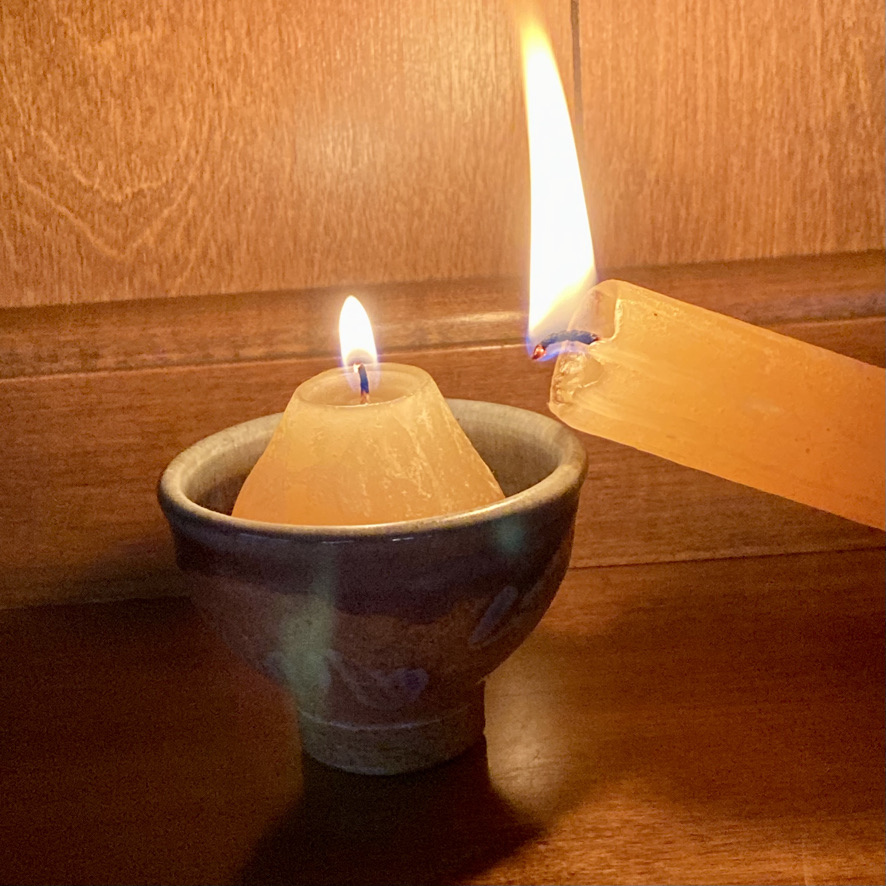
One way to think of rituals is as myths or stories enacted within a sacred space or in order to create a sacred space — to recognize or to make an altar. I’ve spoken about the rising of myth & story from the land itself in indigenous cultures around the world. Myth/Story, Ritual, and Daily Life are inseparable from the Land, which is not only altered but also altared by the living Earth community of which humans are an integral part.
And here I am in North America, born to this land for generations and still a descendant of immigrants who were driven by a variety of circumstances from their native lands in Europe, where their ancestors had learned the myths and stories that had arisen from those particular places, had altered and altared the land over centuries or millennia. What did it mean to them to leave behind the places that held their stories?
We all know many of the ways in which immigrants may alter — and be altered by — the new lands in which they find themselves. Here, in the part of North America where I am now living, the alterations to the land are obvious — swamps drained; forests clear-cut; mountain-tops removed and dumped so that they fill surrounding valleys & bury the streams; soils depleted by unmindful agriculture or scraped away to accommodate buildings…. Living land entombed beneath asphalt & concrete….. We can see that the Land (which includes its geological features and its community of life) has been altered. But have we altared it? If so, what is the meaning of those “altars” evoked by our alterations? For what purpose have they been created? For the well-being of the all-encompassing Earth community or for personal convenience, comfort, profit? I think these are important questions to contemplate.
How do we gently and meaningfully altar (or re-altar) the place where we find ourselves now — in this precise moment of being?
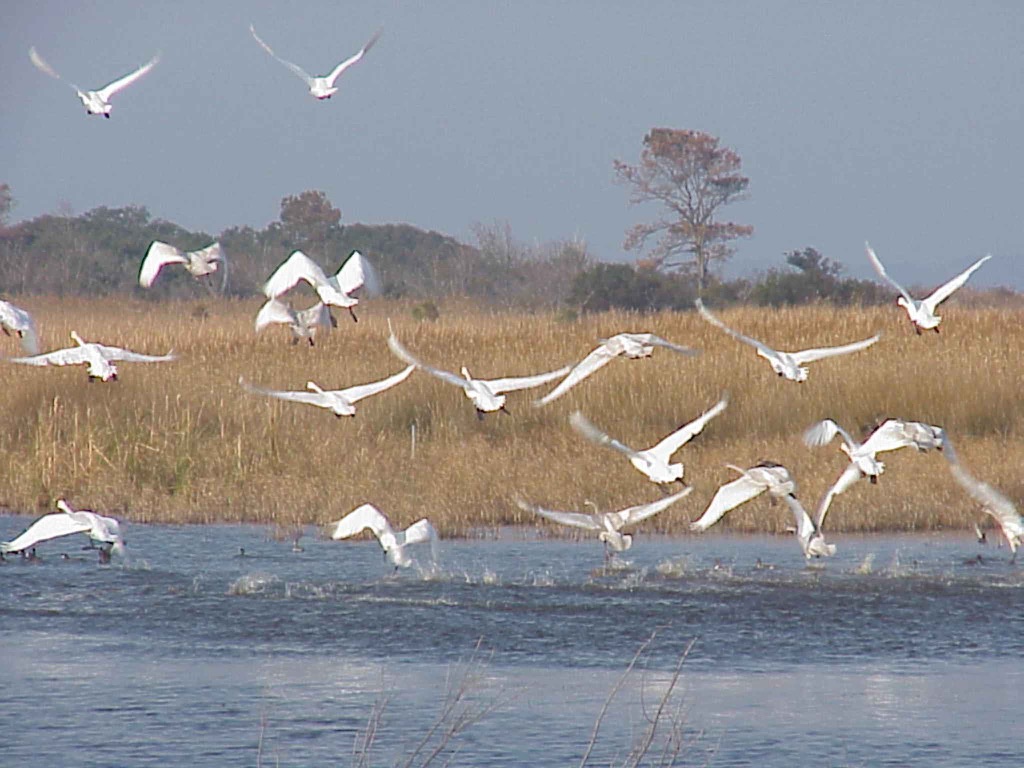
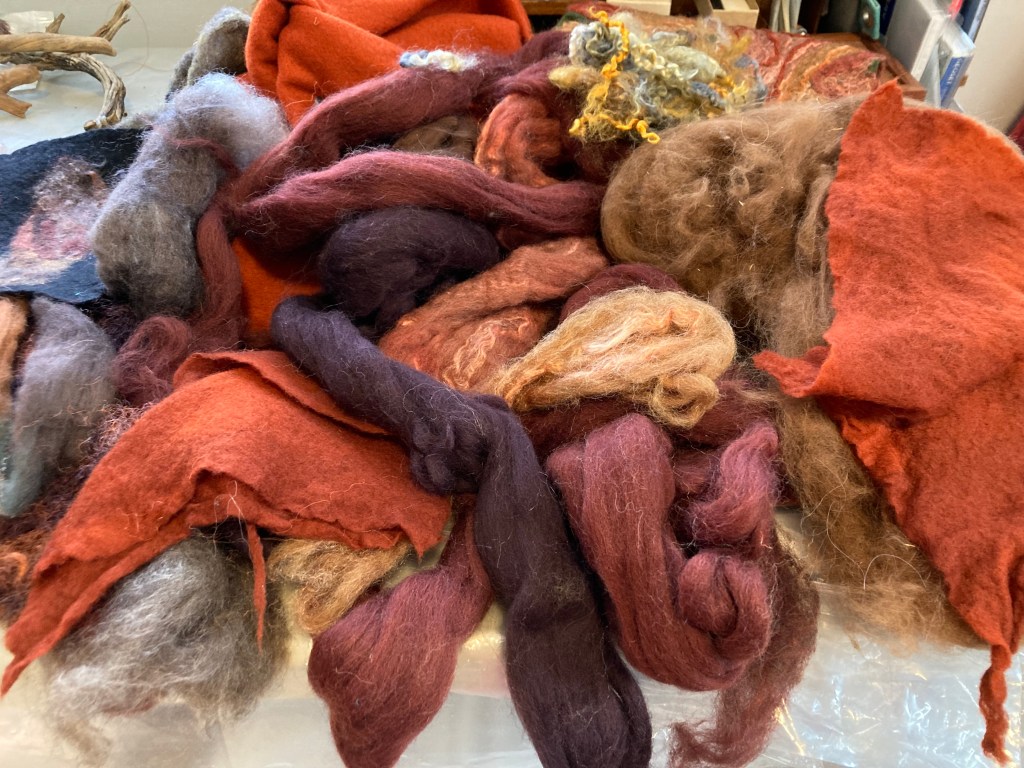
We can do it through our actions. To me, the flooding of fields to make them hospitable to the birds who have flown to the now-missing swamps winter upon winter beyond counting is a making of altar. So is the thoughtful re-introduction of elk and red wolves to the places that gave them birth. And many of us consciously do this altaring of place through our creative work whether our materials are garden soil & native plants, clay, cloth, words, metal, paints, or unspoken dreams….
Sharon Blackie has, in all her written work & oral teachings, stressed the important interconnections among the threads of Story/Myth, Place (in all its aspects), and Human well-being. She often speaks of an original compact of mutual care that must exist among Land, Culture, and “the Otherworld” (however you experience & name the Life Force or Divinity or Mystery). Stories known from many (all?) cultures tell of the wasteland that results from the cutting or the mindless tangling & distortion of these three essential threads of our existence. Dr. Blackie speaks movingly of the need to “re-mythologize” the Land, which is another way of altaring it.
The task of “re-mythologizing” becomes more and more urgent in this time of increasing alienation “– alienation from ourselves, our fellow human beings, and the world we live in. In a 2016 [UK Office for National Statistics] report, around 40 per cent of adults reported that they did not feel a sense of belonging to the places where they lived, and in people under twenty-four the figure rose to a remarkable 50 per cent.” (Blackie, The Enchanted Life)
In her essay “Belonging to the Land’s Dreaming” — https://www.humansandnature.org/belonging-to-the-lands-dreaming — Dr. Blackie writes:
“When I try to explain to people the essence of my relationship to place, I usually call myself a “serial rooter.” I’ve lived in many places during my life, but I’ve rooted deeply in almost all of them. …… [A]t the very deepest level, place makes us who we are. We think that we imagine the land, but perhaps the land imagines us, and in its imaginings, it shapes us. The exterior landscape interacts with our interior landscape, and in the resulting entanglements, we become something more than we otherwise could ever hope to be.”
“…. For many of us today, though, our relationship with place has become demythologised—a fact which is both an explanation for and a consequence of our sense of alienation from the world around us. Remythologising our places, then, is not just an interesting intellectual exercise, but an act of radical belonging. Like any other species on this planet, we badly need to be grounded; we need to find our anchor in place, wherever we might happen to live. Stories can be our anchors.”
“We’ve forgotten much of the old dreaming; it’s time to scrabble amidst the rubble, and see what stories we can unearth. But even more important is the need to participate in the process of its never-ending becoming. If the stories of a place are alive and transforming, then so is the soul of the world as it expresses itself in that place. And so are we, held within it. Because it’s acts of imagining, ultimately, which keep the world alive and thriving. The land is waiting for those who know how to watch and listen; for those who are open and know how to dream. It’s time to dream along with it.”
Speaking of the Hudson River Valley, the bioregion in which he then dwelt, Thomas Berry [early explorer of deep ecology & theologian — or, as he preferred, “Geologian”] wrote in The Dream of the Earth:
“Tell me a story, a story that will be my story as well as the story of everyone and everything about me, the story that brings us together in a valley community, a story that brings together the human community with every living being in the valley, a story that brings us together under the arc of the great blue sky in the day and the starry heavens at night, a story that will drench us with rain and dry us in the wind, a story told by humans to one another that will also be the story that the wood thrush sings in the thicket, the story that the river recites in its downward journey, the story that Storm King Mountain images forth in the fullness of its grandeur.”
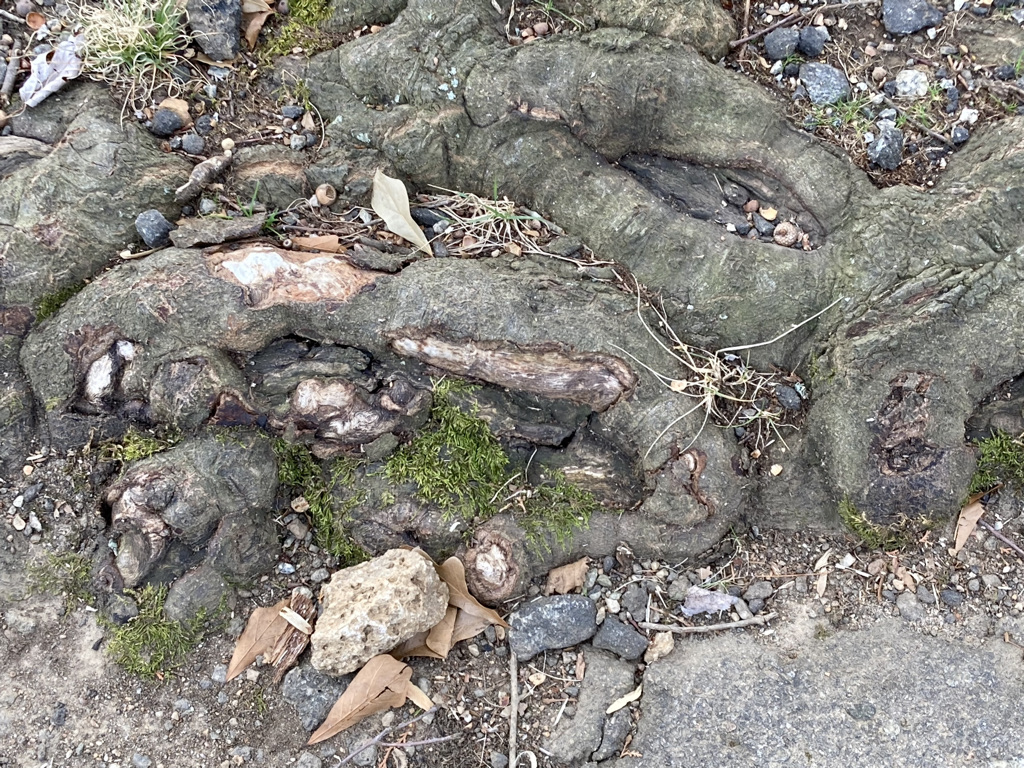
Have you learned the old stories told by those indigenous to the place where you live? Have you discovered new stories that can help heal the wounds in this unique place, in its life community, in ourselves? Here is a photo of some roots along the road I walked this afternoon. How many stories are embodied here? How many myths are being called forth?






 Sharing Trickster's Hoard